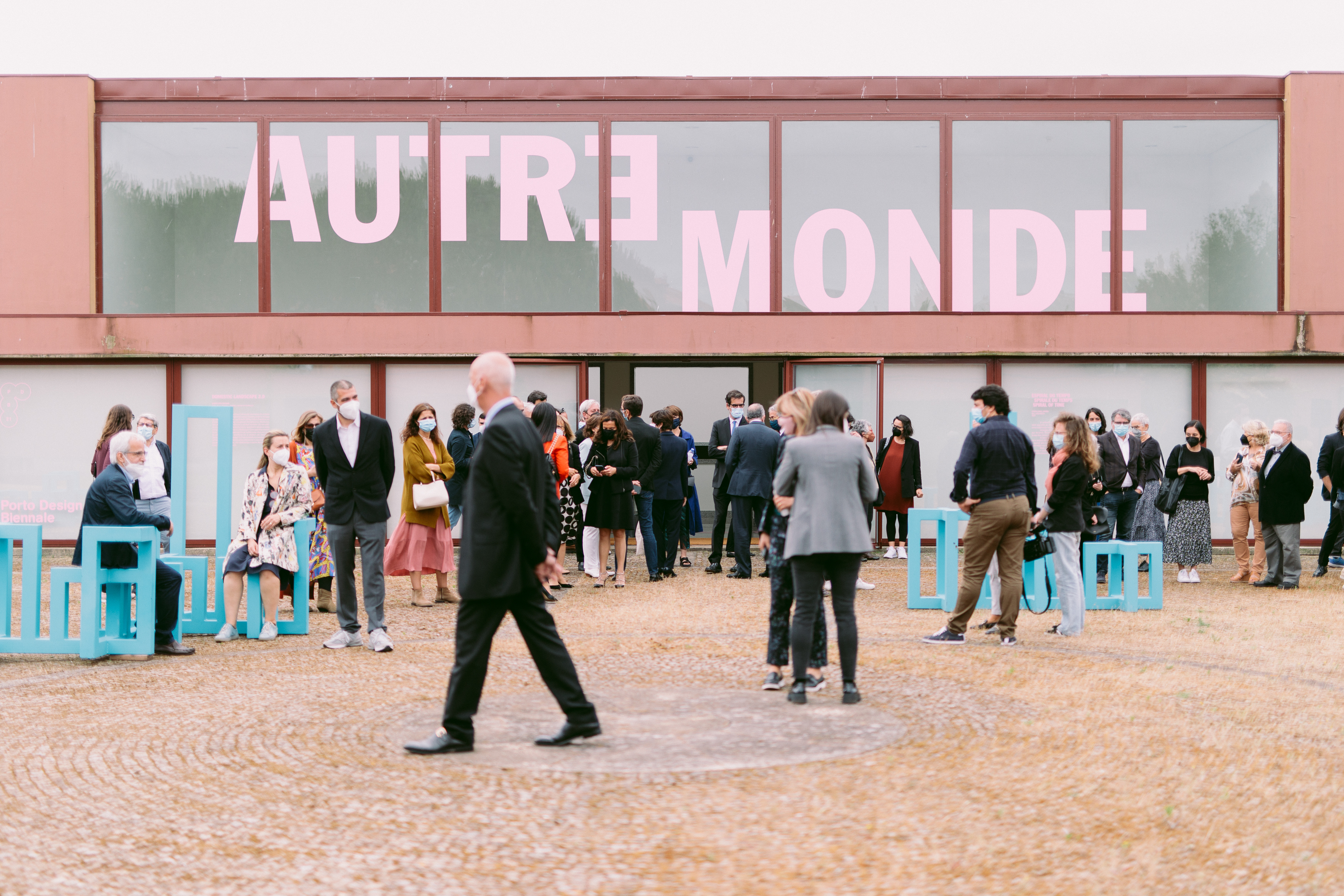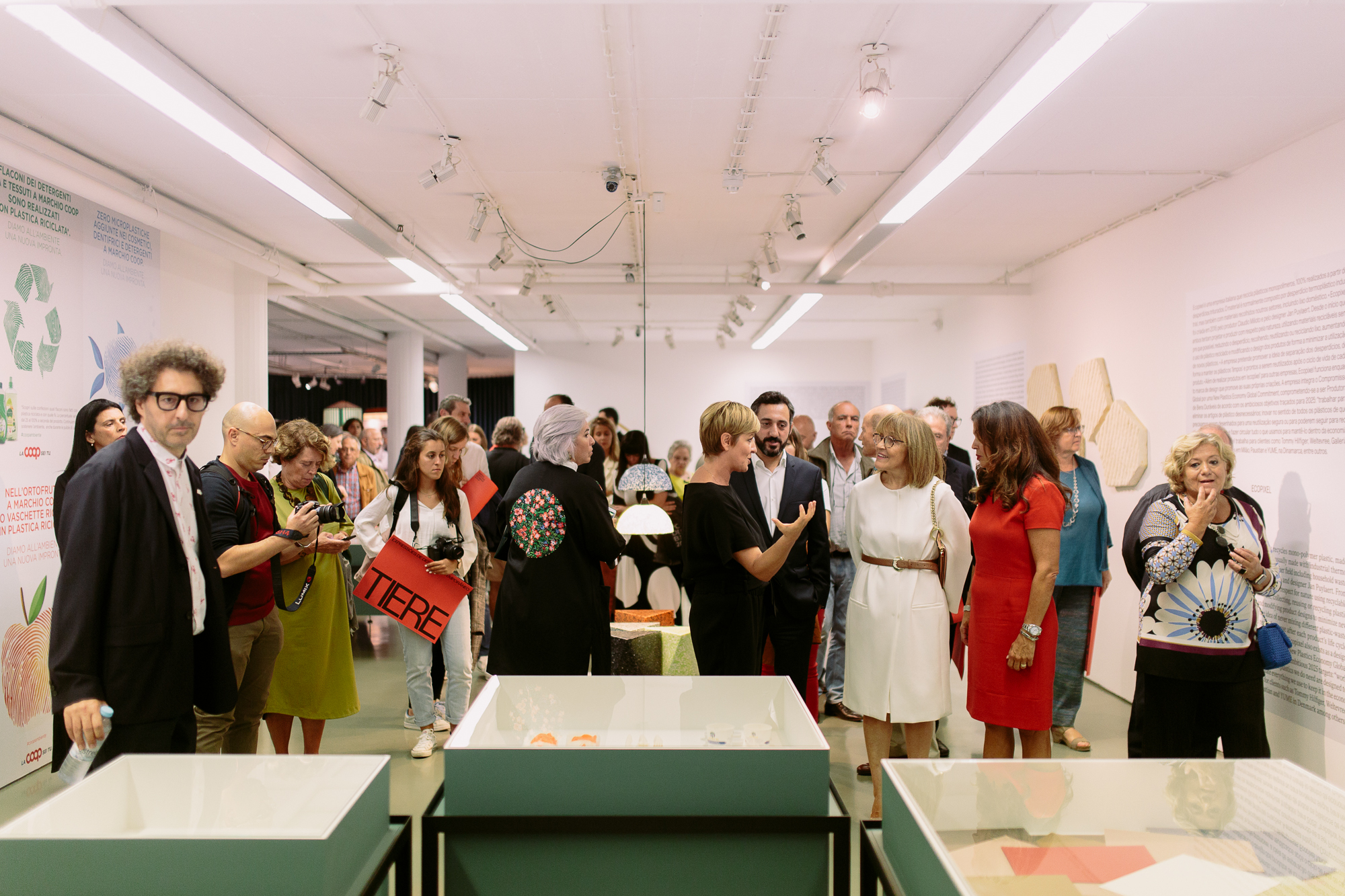
The inaugural edition of the Porto Design Biennale under the theme Post Millennium Tension, took place between 19 September and 8 December 2019 with José Bártolo as curator-general. Over 81 days, the event showed design as a central disciplinary field for the observation of the contemporary world, capable of thematising social and political, ethical and ecological, cultural and technological, economic and ontological dimensions. It also revealed design as a practice of crossing borders, of disciplinary interactions, of activating broad and diversified partnerships.
The aim was to build a programme resulting from research and thought, from production and action on contemporary tensions, presupposing a will to identify, analyse, debate and modify them. During the two months of the Biennale, around 300 projects were presented, with 17 exhibitions, 22 workshops and 25 conferences/presentations, involving 20 curators and 310 participants of 18 nationalities.
Between September and December, the Biennale was an informal school where knowledge was exchanged and pedagogical models were tested. A total of 35 guided tours were held, mainly for higher education groups, with a total of more than 2000 visitors. The aim was also to make the biennale a great forum, expanding the field of design, mixing it with other disciplines, crossing historical knowledge with futurological visions and summoning some of the most instigating names in the field of design, architecture and critical thinking. 25 conferences/presentations were organised and new conference formats were tested: from the unconference model to the performative conference or the performative dinner.
This event could not take place without a thinking territory, without an inter-municipal bet and a public strategy for design. The Biennale was made in the territory and with the territory, activating 37 spaces in Porto and Matosinhos, blurring the differences between the metropolitan municipalities.
The Porto Design Biennale is promoted by the Porto City Hall and the Matosinhos City Hall and organised by esad-idea, Research in Design and Art.